
We Need More Public Champions Like Debra Hammond and Jack Spicer
Protecting, celebrating, and improving Promontory Point
September 2025
If you are in or near Chicago and want to experience a treasured little piece of public heaven, then I urge you to visit Promontory Point along Lake Michigan, at about 5400 South Lake Shore Drive. This is a special edition of the “More Public” beat for “CivicNotes.” I would like to share this 30-minute interview with two great Public Champions, Jack Spicer and Debra Hammond of Hyde Park. Jack is a co-founder and President of the Promontory Point Conservancy and Debra is the Treasurer. Please consider becoming a paid subscriber to “CivicNotes” to help keep our civic lights on 😊!

At the conclusion of our talk, I ask Debra and Jack to answer my Five Questions for Public Champions:
- What is your organization, title & role, what is goal of your org?
- What are you – personally – fighting for?
- How does “public” show up for you?
- Who influenced you/your work?
- What words of wisdom do you have for young organizers/justice champions?
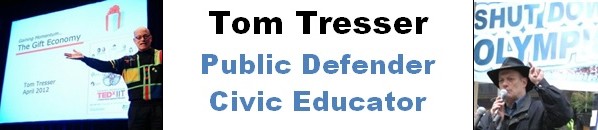
Tom Tresser
The week we’re talking about more public. And I was thinking about who, who has done a great job in Chicago for lifting up, defending and sort of explaining what the heck public is all about, especially about a special place. And I thought of Jack and Debra, who have been long time activists on the south side of Chicago the Hyde Park. And something special that they’ve been working on, which is called the Promontory Point. So I would like you guys to say hello and introduce yourselves and tell us a little bit about what that space is and how you got involved in it.
Jack Spicer
Tom, thank you for having us both. This all got started back in the 80s when the lake level was so high and Lakeshore this drive was getting flooded and getting threatened, so a bunch of people went to work with the federal government to get some money and a plan. What they came up with, originally was to rebuild the eight miles of limestone block revetment along Lakeshore drive and along the edge of on the edge of Lake Michigan. What they actually started doing was building it, destroying the revetment, and reconstructing it in concrete and steel, contrary to the expectations and contrary to legislation, they just did it on their own. And we saw this coming. There’s a little section of 54th Street, 53rd Street that they did, because it’s very close to Lake Shore Drive. And they did that in the late 90s, and we saw what was coming to promontory point. So when they held their first community meeting in 2000 to announce their plans, we were ready for them, and we disrupted that meeting. This was in January of 2000 right after the millennium, and we disrupted them. We’ve been funding them ever since. So this is now 25 years of struggle,
Tom
25 years! So just to we’re going to put a map up so people can see we’re talking about Lake Michigan. That’s where we are Chicago, and promontory point is around like 53rd Street or 50/55 Street. So again, for people who are not in Chicago, you know, the zero line kind of cuts through the heart of the loop of Chicago, and then you go south and north. It’s a grid system, so it’s a few miles, you know, south of the loop, you’d say, you know, along the lakefront. And it’s a particular part of land that sort of juts out. So it’s a point like a little, little knobby land. And so what’s on this land? What’s so great about this little particular place?
Jack
Well, first place, it’s entirely man made. It was a WPA project during the late 30s. So none of this is natural lakefront, but it was created and designed to look like natural lakefront looks like it looks like the coast of Maine is what it looks like.
Debra Hammond
And then Peninsula is landfill that was made in the 20s, Chicago had this pioneering way of keeping Lake Michigan from damaging private property built along the lakefront. So they kept doing Lake fill out into the lake and making it public parks. And that happened in the 20 and then in the 30s, with the WPA, go ahead Jack.
Jack
Then they found this, the Promontory Point that they had created, and then started, and Alfred Caldwell became the landscape designer hired, but that he was working for the Chicago Park District. Then he’s Jen’s Jensen’s prime student, and he has this wonderful way of creating designs that involve slow motion and deep emotion, and that’s what you promontory point.
Tom
So how big a piece of land is it? Is it? Is it a few acres?
Debra
Or it’s 40 Acres? 40 so. And it goes from the middle of East, 54th Street, to the middle of East, 56th Street, okay, but it juts out so and we’re particularly concerned about the 3150 linear feet along the edge of this peninsula that’s built in this historic limestone block revetment structure.
Tom
So this is, again, it’s part of the park system along Lake Shore Drive. So you would be driving south and north along Lake Shore Drive, for people are not from Chicago, and as you do so to your east, you’ll see beaches park land that stretches basically the entire breadth of the city. And there’s some history there. I mean, the idea of keeping the lakefront open and free is not that part of Chicago’s historic legacy.
Jack
It’s very unique for Chicago,
Tom
yeah. And so if you think about other cities, particularly on the Great Lakes, there’s industry or private property, hotels, railroad yards, you know, other kinds of staging areas, what have you for industry. But for people who are, of course, from Chicago, they may have maybe taking this for granted and just kind of go, that’s how it always is, but, but as you say, in other spaces and places the other, the other four Great Lakes you go up to Milwaukee, go to, you know, Cleveland, or other places have that have lakefront. There’s factories in use, out of use. You can’t, maybe even get to the lake in some places, Not so here, okay, so this is a particular part of this long lakefront that goes all the way from Evanston, stretches around the curve of Chicago all the way to Indiana, and so this particular part is in in the community that we’re calling Hyde Park. So 25 years of working to save it, and, you know, make sure that it’s okay. I know you have clean up days, you have a lot of activities with something called the promontory Park Conservatory. Tell us a little bit about what that does.
Jack
Well, it’s the Promontory Point Conservancy with nice try.
Tom
Tom, yeah, thank you.
So talk about yourself, Jack, because you’re the president and one of the co founders.
Jack
I’m the one of the co founders and the President at the moment, this was an organization that started in protest for what the park district wanted to do. There was at that point called Save the point. And Leslie, Leslie Harrison, then the alderman, was very supportive of us and helped us get started and helped us stop the point. The park district in their tracks at the time, and that eventually evolved. We decided to apply for status under the National Historic Preservation Act as ending it on the National Register, which we did, and then later on, we be we work to become a Chicago landmark. So we’re an official Chicago landmark as well. So that’s
Tom
and it should be noted, this place is used. I mean, people are going there recreating themselves.
Debra
There are people who swim out there in the winter. They’ll chip holes in the ice, and they’ll jump right in.
Tom
So it’s a place that has a lot of love from the community. It’s a place where people are going to picnic and recreate themselves. And I know you do a lot of activities, so you’re doing cleanup days, but also you’ve got some other things going on too, like learning and other things.
Jack
On the fifth, we’re having October 5. October 5, we’re having Bill Swiss, who’s recorded all of the carvings on the limestone revetment up and down the lakefront. He will be giving a tour. I’ll be giving a tour about the historic landscape there. We’ll have a friend of ours will be giving a tour of people want to find what they can eat off the ground in terms of plants, like foraging. Yes, yeah. He’s a professional forager, and he’ll
Tom
So you’re not only trying to keep what’s there, you know, and make it strong and surviving, but you’re adding all this extra content like learning and appreciation and funny stuff.
Jack
If we weren’t fighting the park district and the Army Corps and CDOT over preserving the line, so that’s what we’d be spending all of our time doing, is having fun things and educational things and meaningful things for people to do at the point. But you’re right. It’s a really diverse community. Lots of people come for lots of different reasons. Some people call it the Church of the point, very spiritual place. People have concerts there. People have running meets there. It’s the and people come from all over the neighborhood, like Alderman Lopez, from Pilsen, comes there with his triplets,
Tom
You mentioned the landscaper, who is Alfred Caldwell, right, who did the lily Yes, right before
Speaker 1 08:55
he did promontory pointing to the lily pool, which is a real example of what the park district can do right when they try.
Tom
And so that’s up at the zoo. So for again, for people are not familiar, it’s at the Lincoln Park Zoo. And this is environment. It’s quite large.
Jack
It’s gorgeous, wonderful, wonderful park. It’s one of the best.
Tom Tresser
And so that guy designed that, and then he also did the landscaping. So it’s not just a nice place, but it actually has some artistic attention there. It seems like
Jack
it’s very, very if you watch people come to the point they travel very slowly, they walk through it, or they’re riding their bikes slowly. But it’s not a race. And not people are trying to accomplish something. They’re trying to meditate and feel the power of it, and they go slow. And there’s a deep emotion at the point. I mean, everybody who comes there feels that you can just talk. We talk to people all the time. Just ask them why they’re there, what it means to them. And they always talk about the spiritual dimension of it, and the community, fact that there’s all kinds of people there, getting along just fine, not fighting, no violence. Everybody feels safe. It’s all kinds of people from all over the city. It’s not just a Hyde Park thing.
Tom
Well, again, that’s a meditation on the power of public this is a public space that’s being carefully loved by you and your and your neighbors. So, you know, you’ve guys have been involved in a lot of stuff in Hyde Park, around parks, public space. What is your thinking about? Like, just public space generally, you know,like this is an example of a great public space.
Jack
One of the things you can tell about public space is that people feel like it belongs to them. They don’t feel like guests there. And that’s the way it is. At the point, people feel like the point belongs to them. It’s our point. Is our community’s point, and we’re not giving it up for nothing, and people are willing to defend it. And this is 25 years of a almost total community commitment to saving promontory point. And that says something about what kind of space it is for people. It really is public in that sense. It’s about the community. Communities take a long time to develop and become established, and you can blow them you can blow them up overnight, but you can’t rebuild them overnight. And this has then been there for a long time. People have made our community for a long, long time, and they’re willing to fight to keep it that way well.
Tom
And you can meditate on that and apply that to other public spaces and places you know, in not just this city, but other cities I know, for example, people feel strongly about parts of Jack of Lincoln Park, and of course, Washington Park, to the African American community, has a lot of meaning. People have family reunions and baseball and sports and place to come and drink a beer and walk your dog, throw your frisbee, bring the kids. So like you say, it’s important for us to remember and lift up this idea of public in this case, a public space. But we might also meditate on public libraries, you know, public schools, public health, but, but for now, I think you’re, you’re helping us understand the magic, really, of this public place, what it what it means. It’s hard to it’s hard to quantify how much all that is worth.
Jack
It’s one of the those wonderful third places where people could come together that wouldn’t otherwise know each other, wouldn’t otherwise care about each other. And the real tragedy here is what the park district is proposing to do, would close promontory point entirely for five years, the community would be destroyed. It took 9585 years to create this community. It could be destroyed overnight.
Tom
Well, we’ll have screenshots of your website at this point, but tell us what is going on with the city. I mean, here you guys are, you know, connected to the alderman, well known community leaders. I mean, you guys cut like, five PhDs on parks. You know, you could, like, teach a class. And as you say, you’ve been through this fight, you know, with the various agencies, what is going on with the city? Why are they so intractable? Debra, take it away.
Debra
Yeah, it’s a great question, and I’m afraid we can’t answer it. It doesn’t really make a lot of sense. This could be, truly be a win win for everyone. So everyone’s benefited. So the Army Corps, the city, the Chicago Department of Transportation, CDOT and the Chicago Park District have the funding for a storm damage and shoreline protection project. This is actually back in 1994 the original Chicago shoreline project. Two portions of that Chicago lakefront were never constructed, Morgan Shoal, which is from what 47th Street, 45th Street to 51st Street and then promontory point and so. So back in December of 2022 the agencies got a funding authorization to move forward for design and construction at more control and promontory point. From what we can tell, they’re planning on demolishing the historic limestone revetment and replace it with a new structure for the cost of $100 million so what we did for the so the community, over this long stretch has actually raised the money to do for engineering reports. And this year, we released four new studies, brand new studies looking at promontory point, a condition study to show that it has not failed. It’s functioning right now for the purpose it was intended for coastal resilience, that it can be fixed and fairly easily and fairly cheaply, for roughly half the cost, because the materials are all there, and it’s just about putting in some new stabilizing materials underneath the promenade and repositioning the blocks. You don’t have to take the whole thing apart so it’s in place, in kind materials. So we were able to raise that money, mostly from the community. We got some grants from the Richard H Treehouse Foundation, the National Trust for Historic Preservation and landmarks Illinois, to help us along for the last bit. So we’re still fighting to save the point as of what June 16, we know that they have not altered their plans, that they are moving ahead to for demolition and replacement, even though it’s technically illegal, given the preservation Yeah.
Tom
So it’s kind of a we don’t really have a theory of the case. I always think it’s, look at the money. Somebody’s making money from this. That’s my completely unsupported conjecture.
Jack
One of the things I’ll add here is that when we first decided to get these independent third party engineering reviews done. We went to some of the local engineering companies, and they all said, unilaterally, unanimously, this is an easy project, as easy preservation project that can be done but we can’t touch it.
Debra
We found engineers out of New York who are really amazing. For one thing, they’ve worked on every inch of Manhattan Island, either for the Army Corps or with the Army Corps. And then they’re a firm of record for the Army Corps marine design center. So they come with impeccable, impeccable credentials. This is McLaurin engineering group, and then we were able to fund a historic structures report from with Jenny Helsner. And, you know, there’s a multi there’s a variety of ways that you can fix the revetment without destroying it. They’re all economical and affordable. We’re not toting a complete competitive plan. We’re just trying to make sure that there’s a reasonable preservation approach and that the community has input into what happens.
Tom
Right? It says, You say it’s people feel like it’s their park, it’s their point, and you guys have deep knowledge about not just the environment, but the engineering and, you know, kind of like the mechanics, or even the, dare I say, the physics of water on stone way beyond the casual Park goer, I would say. But I hope that those watching understand the depth of love and commitment from these two people to this particular place that they have gone so deep into this knowledge to be able to speak authoritatively, I would imagine that you could hold your own with an engineer, with a landscape architect. You know, in these space, in these spaces and places where they come and they tend to pontificate, and they want to hear, like, two minutes from you, that’s right, and I’ve been in those, in those situations,
Jack
so it’s very performative. I mean, they want to pretend, but they’re not actually listening. They’re not even taking
Tom
I mean, it’s so sad, because Mayor Johnson, you know, used to be a school teacher. So where is, you know, where’s the schooling here? I used to be a union organizer. So where’s the where’s the power to the people? All gone, all gone. Don’t see it. So promontory point, beautiful place, seems to be in danger. Again. What can people do?
Jack
Well, the first thing they can do is come to the point and enjoy it. That that feeling, that emotion, builds up over time, and you can actually feel it when you walk onto the point. You can feel all the people and all the pleasure that the people have had in that public space. So come and enjoy it. Subscribe to our newsletter@promontorypoint.org and if you can contribute to our struggle, please do that too.
Debra
And the agencies will be holding their community meetings. We don’t know when, maybe next year. So it’s very important that people who go to the point and love the point show up at these meetings and speak out. So when they’re asked, Do you want pink concrete or blue concrete? The answer is, no, concrete. Yeah.
Tom
Don’t be fooled by that choice. But you make a point there. Debra, the idea is, if you love something, you sometimes you gotta fight for it. Don’t take it for granted. And that’s a problem. I think with America, we take a lot for granted here, whether it’s democracy, the rule of law, or the park that you go to every day with your kids, are you thinking it’s always going to be there, right? Guess what? It could not be there. So, yeah, it’s a time to step up. I think, you know, in our public life, if you will. And if you don’t think you have any skin in the game, think again. You know, because if they can take that part, they can take they can do that. I mean, you know, what else can they do? And in this arrogant way of, you know, contracts coming from, we don’t know where, we don’t know who’s making money. It doesn’t seem to make any sense. You know, all these pieces of outrage have happened over and over again, not just to your space, but in a lot of places.
Debra
No, that’s a good point, because we’ve got the engineering and economics and the environmental justice piece, you know, nailed down, but it’s really up to it’s really up to people showing up and speaking out.
Jack
It’s politics now, and people speak up and they get heard. If they gotta be heard enough they get heard. Yeah, I’d be heard.
Tom
Sadly, that is a true thing. You know that. You know you got to show your power. You got to bring people to those meetings. People should. We’ll put the links, you know, in into this, into this, so people can go to your website. They should sign up for your email newsletters so they’ll be up to date with all these different meetings that are happening. Sometimes they’re scheduled very quickly, you know, again on purpose, and inconvenient times and places, again on purpose. But again, if you’re going to love on this park, if you’re going to love on this place, you got to say, Okay, I’ll come to the meeting, even if it’s at noon, you know, I’ll, I’ll have to figure it out, you know, and get yourself to that meeting. And, you know, do your homework, check in with the leadership of this organization. And so maybe you’ll, you’ll take a sign, or you’ll, you’ll sign up to speak. I mean, not just show up, but show up intelligently. Is what, is what I would say to people are listening to you? Well, this has been fascinating, and I could talk to you guys forever, because this is just part of your work. You’ve done so much other things in Hyde Park, around Jackson Park, and other places and spaces. But I want to conclude our time together and ask each of you what I call the five questions. And these are the five questions, and you can each answer them in turn. What are you personally fighting for? I think you’ve given us a good example about that. How does the word public show up for you, who influenced you in your work. And then what words do you have for young organizers or young fighters for justice who may be listening? So we’ll start with Jack. What are you fighting for?
Jack
I’m really fighting for the community that’s grown up at promontory point. It’s a way to I feel part of the public, part of a community, and I don’t want to lose that. And communities get built very, very slowly, and they’re very fragile. They’re strong, but they’re also fragile. They can get broken up in a moment. And that’s what we’re fighting to protect, as much as the limestone revetment. We’re fighting to protect that community that’s existed at promontory point that anybody is welcome to, anybody in Chicago, anybody anywhere we had, we were out there yesterday with a cleanup. We had some people from Spain who showed up because they had heard that was a wonderful place, and they felt it, and they felt welcome there. We felt we were happy to welcome them to the promontory point that happens all the time.
Tom
Debra, what are you fighting for?
Debra
Oh, well, double ditto, you know, to stop the demolition of the historic limestone revetment and the clear cutting of the trees and the closing the point for five years. But when they do that, they’re going to destroy this really remarkable, diverse community that’s been that’s formed at the point, and you know that’s been there for nearly 100 years, and they’re out there every day. Somebody is out there every day of the year doing something, meditating, praying, meeting friends, having their first date, swimming, whatever. The park is always in use. So it’s worth fighting for. It’s worth saving. Fantastic.
Tom
So Jack, how does the word public show up for you? What does that mean to you?
Jack
It just is, as I said before, Tom, it’s about community, and community is a wonderful thing to have. We can’t live without it, and it’s easily destroyed by big business and by bad government, and we’re trying to prevent that.
Tom
How about you? Debra, the word public, what does that mean for you?
Debra
Well, what it means for me is Parks for People. This is about the public trust doctrine that you know, land gets set aside. It gets reserved for the well being of people, the people who live there, the people who come to visit. It’s not for commercial for commercial purposes. It’s not for private real estate purposes. This is public land for parks, for people, and most of all, it’s that. It’s that community that’s made what it needs. It’s this remarkably safe, peaceful, beautiful, third space in the city. It’s become a refuge and a sanctuary from the hassle of the city. And we hear that from people all the time, and that’s a really amazing thing that that has happened in a public space, but people who love that public space, and it’s pretty it’s pretty extraordinary.
Tom
Jack, who influenced you in your work?
Jack
Well, Jane Jacobs, for sure. Because Jane Jacobs understood the damage that bad government and big business can do to communities, and how fragile they are on that so she was a real motivator for me when I was first getting involved in preservation Ivan IIich, another great writer from my day probably, I don’t know if anybody reads IIich anymore, but he was a very strong proponent for people having living their own experience, not listening to everybody else from the outside, not listening to experts, not listening to Government, but taking care of themselves and being resilient and self-reliant. And I suppose also Jens Jensen, who was Alfred Caldwell’s mentor, he had a wonderful attitude towards how to how to combine both nature and urban civilization in a way that works for both. He’s a Alfred Caldwell, being his major student, did a beautiful job of doing exactly that at the point. I mean, you’re in the city and you’re not at the same time, and they’re not antagonistic. It’s America.
Tom
That’s it’s like a work of art. How about yourself? Debra, who influenced you?
Debra
Well, Rabbi Arnold Jacob Wolf was a rabbi here in Hyde Park. He wasn’t just a spiritual teacher. He was a political activist also. So he was working in the 1950s and early 60s. He was working for peace in the Middle East. He was advising Palestinians about non violent resistance as a way to get statehood, until he realized that everybody he was working with was getting assassinated. At any rate, he never sidestepped controversy when he was in pursuit of justice and equality and freedom, and that that’s an inspiration, but I’ve come to appreciate Alfred Caldwell a lot because he’s designing parks. I mean, he wasn’t just designing parks. It turns out that he was building them with the people that he hired. He was out there working with them to make these parks, which I think is pretty extraordinary. So it was this collaborative thing that he was doing. I really like that, and he really cared about democratic space, and he was designing parks to be democratic. So if you think about the council rings at promontory point, there’s their circles, there’s no head of the table, there’s no one in a leadership position. Everybody is equidistant from the source of heat, the source of nourishment, access to Lake Michigan is very much in the spirit and the design of what he was doing. I appreciate that.
Tom
So that’s beautiful. We’ll put links to all these individuals. And finally, Jack, what words of wisdom would you have for some young fighter that might be listening to this
Jack
fight and be persistent about what you care about and what you your friends care about and what your community cares about, that’s all that we really have to go through this dark, dark period as community and taking care of one another. So and don’t give up, just be persistent. Be persistent. Be persistent.
Debra
25 years, Jack and I are hoping that we live long enough to see a good outcome!
Tom
We’ll give you the last word, Debra, your words of wisdom.
Debra
Don’t be afraid to stop and pause and listen to people, because people have really powerful stories that that shape the actions that we need to take together to preserve and protect our communities. In the midst of all this change that’s happening pretty rapidly, but I think it starts with listening and caring about each other.
Tom
Well, I’m listening and I’m caring about you guys right now, that’s for sure. Thank you. So this is Tom Tresser. Civic notes. Our addition here is we’re dealing with more public with two public champions that I would say are fighting for, not just park space, but I would say democracy space. Put it bluntly, Jack Spicer! and Debra Hammond of Hyde Park Chicago, the organization that they’re working with is called the Promontory Point Conservancy, and we hope that you will connect with them and send them some civic love. So, thanks again.
