HSBC Too Big To Indict

From the front page of today’s New York Times:

“State and federal authorities decided against indicting HSBC in a money-laundering case over concerns that criminal charges could jeopardize one of the world’s largest banks and ultimately destabilize the global financial system.

Instead, HSBC announced on Tuesday that it had agreed to a record $1.92 billion settlement with authorities. The bank, which is based in Britain, faces accusations that it transferred billions of dollars for nations like Iran and enabled Mexican drug cartels to move money illegally through its American subsidiaries.

While the settlement with HSBC is a major victory for the government, the case raises questions about whether certain financial institutions, having grown so large and interconnected, are too big to indict. Four years after the failure of Lehman Brothers nearly toppled the financial system, regulators are still wary that a single institution could undermine the recovery of the industry and the economy.

But the threat of criminal prosecution acts as a powerful deterrent. If authorities signal such actions are remote for big banks, the threat could lose its sting.”

You think? First these criminal institutions were too big to fail. Now they’re too big to indict. Sounds like the government is granting effective immunity to banks and corporations to break the law with little effective punishment. If it’s just a fine – well, that’s now the price of doing business. A price that’s passed on to the consumer, which would be us.

Folks, these banks are accused and are guilty of money laundering to terrorist outfits, rogue states and the drug cartels. Aren’t we “at war” with those players? Not to mention tax evasion, criminal fraud, collusion, cover-ups and a pervasive culture of greed and venality. Apparently ANYTHING is OK when there is profit to be made.

Where is the outrage from America’s universities, law schools and business schools? Where is the revulsion and alarm from the columnists, pundits and politicians who have defended the market so unhesitantly?
 

We Will Pay More For Infrastructure

From Reuters MuniLand Service, reported by Cate Long:

Two major American cities are embarking on large capital programs, but in very different ways. Boston Mayor Thomas Menino has a $1.8 billion, five-year plan that he will fund with municipal bonds, while Chicago Mayor Rahm Emanuel is trying to push a $7 billion plan, which will be paid for by private investors, through the city council. It would be hard to find to two more dissimilar approaches to rebuilding America’s urban infrastructure or two more different lists of who will reap the monetary benefit of the improvements.

Boston approaches its infrastructure needs with a rolling five-year schedule of projects that is updated on an annual basis. This allows for more controlled expensing and planning. In contrast, Chicago’s Emanuel announced his infrastructure privatization plan in January with very few details and buy-in only from the private investors who will benefit from their involvement. The Chicago proposal gives control of infrastructure decisions to a panel of four private citizens and one city council member with no ability for the city council to have oversight on projects and contracts. Chicago has a terrible history of leaving taxpayer money on the table in its privatization efforts. In 2008 the city’s parking meters were leased out to private investors for a tiny sum…

Talk On Tech & Social Change

I’ll be doing a talk and workshop on “Using Technology For Social Change & Community Organizing” at the Bronzeville Visitor Information Center, Friday, November 30, 2-4pm. 3401 South King Drive.RSVP to 773-819-2053.

  • How are people using the Internet & social media to effect change and make their voice heard?
  • How do you use Facebook & Twitter for social change?
  • How might Chicago groups use these tools to affect change here?

Nonprofit Software Development Summit In Oakland

Holy coders! Hundreds of socially minded hackers, designers and developers are heading to Oakland this week for the Nonprofit Software Developers Summithosted by Aspiration Tech. Here are the session clusters on offer:

  • Nonprofit Software Essentials
  • eAdvocacy and Online Organizing
  • Nonprofit Web Development
  • Mobile Development and Mobile Security
  • Mapping and Geographic Information Systems
  • Business Process and Sustainability in NPTech
  • Data, Identity and Privacy
  • Open Source Content Management Systems
  • Nonprofit CRM (Constituent Relationship Management)
  • Free and Open Source Software for Nonprofits
  • Community and Technology

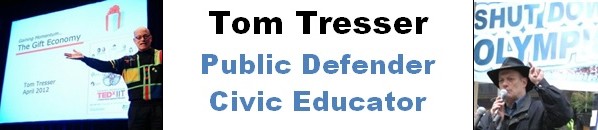
CivicLab co-founder Tom Tresser is going and he’s couch surfing while he’s there! Follow the action on Twitter @ #npdev and #civiclabchicago.

“Welcome To The Gift Economy” @ Bioneers Chicago

I was at the Bioneers Chicago on Saturday, November 3 doing a workshop on “Welcome to the Gift Economy” – it was a critique of our current financial system and the institutions that teach it and about giftedness and P2P reciprocity. We CREATED our very own Gift Economy on the spot! Here is the deck:

Join Us @ Pumping Station One

CivicLab’s first hack meeting is being generously hosted by Pumping Station: One on Thursday Oct 18th, 7:00PM – 9:00PM.
Snacks, beer, and non-alcoholic beverages provided!

How can open source technology, design, and data accelerate social change and community improvement efforts? From Open 311′s city tracking system and the Grassroots Mapping of environmental impacts, to pedal powered electricity and LED banners at protests; design and technology have proven to be robust change agents.

CivicLab is entering the field with an initiative called “Hacks for Activists” (H4A). H4A seeks to build tools that solve common problems plaguing community organizers. We’re looking for activists, designers, coders, open hardware enthusiasts, and anyone with the slightest interest in technology for social change.

Here’s a few ideas we’re currently exploring but new projects are most welcome:

  • Sign Me Up: An SMS/web based tool to replace paper sign-up sheets at community organizing meetings.
  • Crowd Speaker: An application that would leverage participants’ cell phones as a collective public announcement system at rallies.

For more information and notifications about future meetings, you can contact bsugar [at] skilfullycurled.org, or visit our web site at http://www.civiclab.us.

Please sign up on our Eventbrite so we can get an idea of how many to expect: http://hacksforactivists.eventbrite.com

“Crowdsourcing Social Change” @ TEDxDePaul

Tom presented on “Crowdsourcing Social Change” at TEDxDePaul on October 13. You can watch the presentation deck and listen to the audio here (18 minutes). We did some crowdsourcing on the spot – asking attendees to reveal how much student debt they will have upon graduation and to share ideas for dealing with mounting and unmanageable student debt. Thanks to the folks at GoSoapBox for the use of their platform for this demonstration! Participate here.

We Need To Upgrade US Education

From the Center for American Progress comes a new study, “The Competition That Really Matters: Comparing U.S., Chinese and Indian Investments in the Next Generation Workforce.” Download summary (12 pages) = The Competition That_Really_Matters-summary.

“To position the United States for the future, substantial investments are needed in research, infrastructure, and education. The most important of these areas to address is education. Why? Because as this report shows, the overwhelming economic evidence points to education—and human capital investments, generally—as the key drivers of economic competitiveness in the long term.”

Are you hearing anything like this in the current flurry of ads around the Presidential race?